 Buy online
At a glance:
South Africa’s gambling habit is growing fast, especially among young adults. Many are losing more money than they realise and putting their financial future at risk:
- Young people are spending nearly half their income on bets
- The chance of winning big is far lower than many believe
- Recognising that you have a problem is the first step
- How to take back control in four steps
South Africa’s gambling problem: what you need to know and how to protect yourself
Gambling has always existed in South Africa, but recently something has shifted. Over the past few years, betting has gone from something you did once in a while to something many people do every day. Online sports betting, quick-win games, casino apps, flashy promotions, constant notifications and targeted ads have made gambling more accessible than ever. The numbers show just how serious this issue has become.
Recent news reports show that young people in South Africa are now spending almost half their income on gambling. That is not a typo. Nearly half. Another investigation revealed that South Africans placed more than R1.5 trillion in bets in a single year. The concern from experts is clear: we are heading into a gambling epidemic that is hurting people long before they realise it.
If you or someone you know is placing regular bets, this article will help you understand what is really going on, how to recognise a gambling problem and what you can do to avoid falling into financial trouble.
The truth about your chances of winning
Let’s start with something many people do not want to hear: your chances of winning are extremely low. Most casino-style games are built so that the provider, like a casino for example, wins more often than the player. The same thing happens with online slots and betting games – they are designed so the player wins now and then but loses far more in the long run.
Even when you do win, it is usually a small amount. These small wins are not accidental, either. They are meant to keep you excited enough to keep trying again. Big wins are incredibly rare, no matter what the flashing lights or adverts suggest.
Why can’t I just say no?
A big part of why it feels so tempting to gamble comes from your brain. When you gamble, your brain releases dopamine, the chemical that makes you feel excited and rewarded. The strange thing is that your brain does this when you lose too. So even a loss can give you that same rush that makes you want to keep going.
Some people can walk away after a loss. But for others, that dopamine rush makes it hard to stop. This is where “chasing losses” begins – trying to win back the money you have lost. In the moment, it feels hopeful. But in reality, it is just the system working exactly the way it was built to work.
How did we get here?
For many South Africans, gambling is not really about entertainment. It is about pressure. When money is tight, salaries are stretched and life feels expensive, gambling can look like a fast solution. A quick boost, a shortcut or maybe even a chance to get ahead.
On top of that, the advertising has exploded. Gambling ads are everywhere you look. Social media, sports sponsorships, big-name ambassadors, promo codes, free bets and “boosted odds” are now part of everyday life. These ads make winning seem easy and normal. They also target people who are stressed about money, which makes the temptation even stronger.
Is the industry regulated? Yes, but many experts argue that it is not enough. As gambling moves online, it has become harder to monitor and much easier for people to access without real limits.
How to know if you have a gambling problem
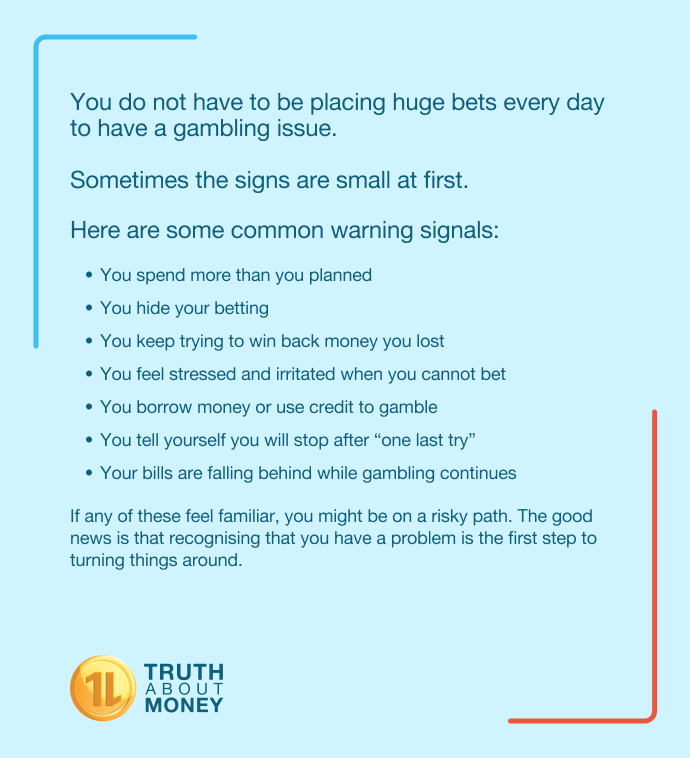
What to do if you think you may have a gambling problem
There is no shame in asking for help. Remember, gambling is designed to be addictive. It affects your mind, emotions and decision making.
Here are steps that can help:
1. Pause and look at the numbers
Open your banking app and check how much you have spent on gambling over the last month. Seeing the total can be a shock, but it is also a wake-up call.
2. Set limits on your accounts
Most gambling platforms allow you to set spending limits or self-block your account for a certain time. Use these tools to create breathing room.
3. Talk to someone you trust
Sharing what you are going through helps break the secrecy that often keeps people trapped. A close friend or family member can also act as your “accountability partner” when you feel tempted.
4. peak to a professional
You can get support from counsellors or therapists who specialise in addiction. They can help you understand your habits and build a plan to change them.
How to avoid gambling becoming a financial crisis
One of the strongest protections against gambling harm is simple financial planning, going back to basics like sticking to a budget, tracking spending, paying down debt and saving a little each month all help. It gives you structure, confidence and a clearer picture of your money. When you feel in control, you are less likely to chase risky shortcuts.
The Truth About Money’s free Financial Independence course is designed for exactly this. It is an in-depth 8-hour course that covers the basic principles of successful money management and wealth building. Sign up today – it is free, online and you can start studying immediately.
You are not stuck
Gambling can make you feel hopeful one minute and stressed the next. It can start small and grow without you noticing. But you are not alone and you are not stuck. With the right information and support, you can take back control of your money and your future.
Financial freedom does not come from lucky wins. It comes from clear choices, steady habits and knowing where your money is going. And you can start that today.